Last Updated on October 21, 2026 by Eric Bonneman
November fishing in Crystal River brings the transition from fall flats fishing toward the sheltered creeks, deeper potholes, and backcountry shorelines that become increasingly important as winter approaches. Redfish and spotted seatrout remain central to the inshore action, sheepshead become more worthwhile targets, and snook provide opportunities during suitable weather. When the Gulf cooperates, mangrove snapper, hogfish, and catch-and-release gag grouper fishing give us additional options beyond the flats.
At Florida Fishing Adventures, we build our Crystal River inshore fishing charters around the conditions your group will actually encounter. A warm November afternoon can call for a completely different approach than the morning after a cold front. Knowing when to work the open flats, when to move toward protected water, and when to slow down the presentation makes a difference.
What Changes in Crystal River During November?
As October fishing in Crystal River gives way to November, passing fronts and cooler nights can have a greater influence on where fish feed. The change does not happen all at once. Warm stretches may keep fish spread across familiar fall habitat, while a sharper cooldown can concentrate them near deeper water and sheltered shorelines.
Water level becomes especially important. A flat that held feeding redfish on higher water may have little usable depth after the tide falls and offshore winds push additional water away from shore. Nearby creek mouths, cuts, and potholes can become better places to look without requiring a long move.
November also changes the timing of a productive trip. Sunrise is not automatically the best starting point. After a cold night, a later period with moving water and some sunlight may offer a better opportunity than the first hour of daylight.
| Condition | What It Can Mean | Fishing Adjustment |
|---|---|---|
| Warm, stable weather | Fish may continue feeding across grass flats, oyster edges, and island shorelines. | Cover suitable water and look for bait, current, and signs of feeding activity. |
| A recent cold front | Temperature changes can shorten feeding windows and move fish toward protected areas. | Check nearby depth changes and slow presentations before abandoning an otherwise productive area. |
| Low water | Shallow feeding areas become less accessible to fish and boats. | Focus on drains, creek bends, channels, and deeper pockets while accounting for safe navigation. |
| Calm Gulf conditions | Suitable weather may allow access to offshore structure. | Consider bottom fishing for mangrove snapper and hogfish, with gag grouper released during the closed season. |
What Can You Catch in Crystal River in November?
Redfish Around Oyster Bars, Creek Mouths, and Island Edges
Redfish are a strong starting point for November inshore fishing. Oyster bars, mangrove islands, rocky shorelines, and tidal creeks provide feeding opportunities throughout the month. The important question is not simply whether an area looks suitable, but whether the water level allows fish to use it.
On higher water, redfish can move onto shallow edges and closer to shoreline cover. As the tide drops, we look toward the outside of those areas, especially drains and cuts that connect feeding flats with deeper water. A small change in depth can be more useful than a large change in location.
Live shrimp, small baitfish, and cut bait are useful options. For anglers who prefer artificial lures, weedless soft plastics and spoons allow us to work around shallow cover. After a temperature drop, a slower retrieve can give less aggressive fish more time to respond.
Quiet positioning matters, particularly when the water is clear. Casting ahead of a moving fish or along the edge of a feeding area is usually a better approach than placing the boat directly over it.
Spotted Seatrout on Grass Flats and in Deeper Potholes
Spotted seatrout, often called speckled trout, give November anglers another dependable species to plan around. Grass flats remain important during mild weather, but sandy potholes, deeper grass edges, and channels deserve more attention as conditions cool.
A pothole is an opening or depression within the surrounding flat. These changes in bottom and depth give trout places to hold close to feeding habitat. When the shallowest water becomes less comfortable, checking the nearest deeper pocket can be more productive than continuing to fish the same depth.
Live shrimp beneath a popping cork is an approachable presentation for beginners. Soft-plastic jigs and suspending lures give experienced anglers more control over depth and retrieve speed. The goal is to work the part of the water column where fish are feeding rather than rushing a lure above them.
Once a productive stretch is located, we can repeat a controlled drift or work the area carefully from a suitable position. A few bites from the same depth are useful information, especially on a day when fish are not evenly distributed across the flats.
Snook Near Protected Shorelines and River Structure
Snook remain part of the November picture, particularly during warmer, stable periods. River edges, creek entrances, mangrove points, and structure with nearby depth can provide opportunities when bait and current come together.
Cooling weather makes location increasingly important. Rather than assuming snook will remain on exposed feeding shorelines, we consider protected water and places that offer access to deeper refuge. A warm afternoon may create a feeding opportunity that was not present during a colder morning.
Accurate presentations are important around cover. A bait or lure should travel naturally through the current seam where a fish can intercept it. Appropriate tackle helps us control the fish without extending the fight unnecessarily.
Crystal River falls within the Big Bend snook management region. Under the current Florida snook regulations, the fall harvest season runs through November 30. The limit is one fish per person per day measuring 28 to 33 inches total length, with no harvest allowance for captain and crew on a for-hire trip. The winter harvest closure begins December 1.
Sheepshead and Black Drum Around Structure
November is a good time to start paying closer attention to sheepshead. It is generally the beginning of the cool-weather buildup rather than the peak of the winter pattern, but oysters, rocks, pilings, and mangrove roots can all become worthwhile places to fish.
Sheepshead feed close to structure and can take a bait with very little obvious movement. Shrimp and small crabs are useful choices, and a controlled presentation helps anglers recognize the bite before the bait is gone. Too much slack makes that difficult, while unnecessary weight can reduce sensitivity.
These are the foundations of our cool-weather sheepshead fishing: suitable structure, natural food, and careful bait placement.
Black drum add another possibility around oyster edges, creek bends, docks, and other bottom-oriented feeding areas. Shrimp or crab presented near the bottom can be effective. They are a useful option when a group enjoys natural-bait fishing and wants to explore more than the usual redfish-and-trout combination.
Mangrove Snapper and Hogfish on Gulf Bottom
When the marine forecast allows, our Crystal River offshore fishing charters give November anglers a different kind of fishing day. Mangrove snapper and hogfish are seasonal priorities around suitable Gulf structure.
Mangrove snapper favor rocks, ledges, and other cover where they can intercept food. Small live baitfish, shrimp, and cut bait can produce, but positioning is important. We want the bait close to the fish without allowing the current to carry it away from the structure or bury it in the rocks.
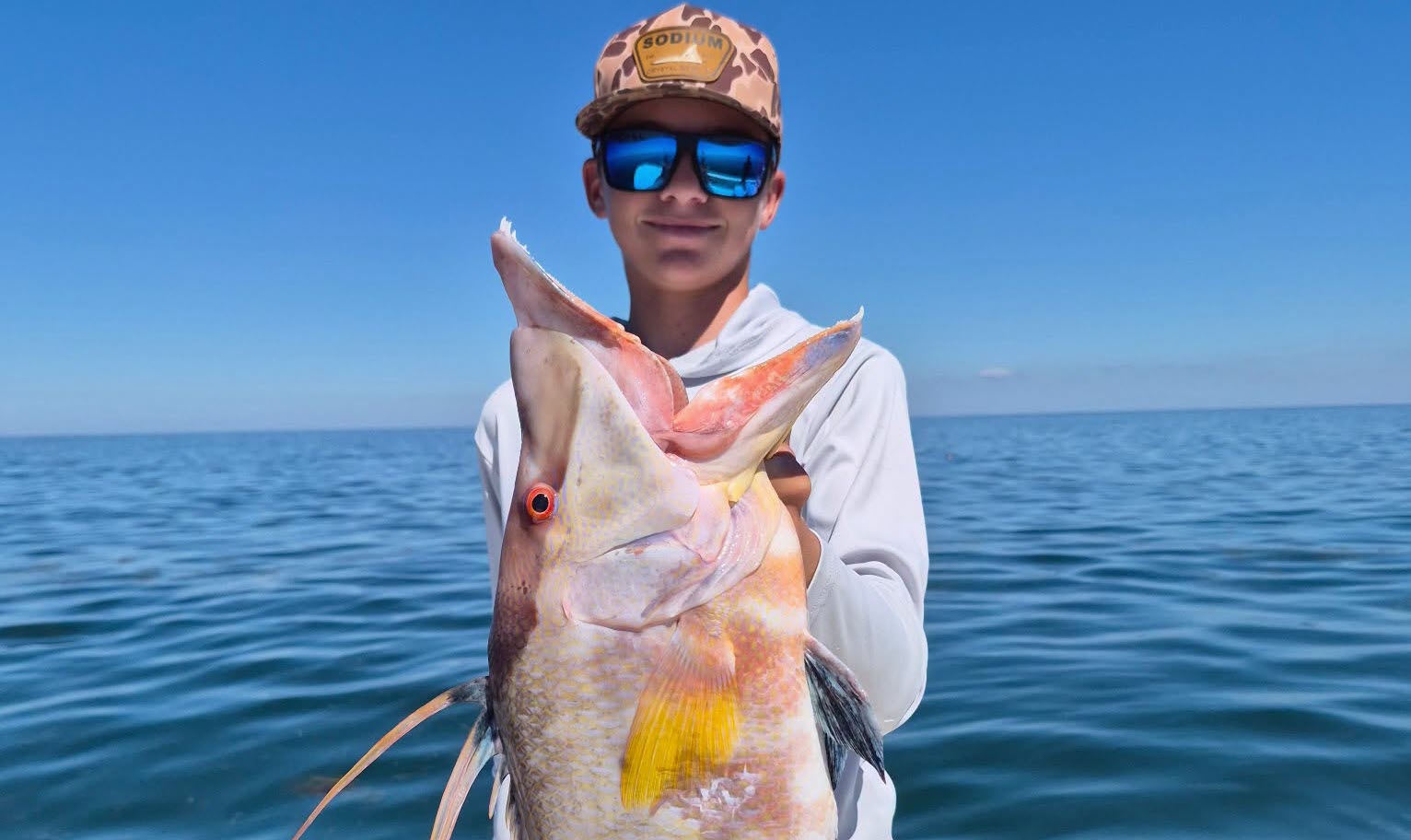
Hogfish feed on bottom-dwelling prey, including crustaceans and mollusks. Shrimp presented near suitable hard bottom and adjacent sand can provide an opportunity, though hogfish fishing requires patience and is not a guaranteed part of every offshore catch.
Under current regulations, Gulf mangrove snapper and hogfish harvest remains open year-round in the waters off Crystal River. We follow the applicable snapper regulations and Gulf hogfish regulations, including the rules for the waters being fished. Mangrove snapper size and bag limits differ between state and federal waters.
November Gag Grouper Fishing Is Catch-and-Release
Crystal River’s shallow-water gag grouper fishery remains an appealing fall option for anglers interested in a powerful fight around rocks, ledges, and other hard bottom. Our shallow-water grouper fishing trips can involve natural bait, trolling diving plugs, or casting around suitable structure.
The challenge comes quickly. Gag grouper try to return to cover as soon as they are hooked, so strong tackle, sound knots, and controlled pressure are essential. Fishing shallow water does not leave much distance between the fish and the structure it wants to reach.
Gag grouper cannot be kept during November 2026. The recreational season in Gulf state waters off Crystal River ran September 1 through September 30, closing October 1. The adjacent federal season closed at the same time.
We plan November gag grouper trips around release, not harvest. Review the current Florida grouper regulations and the 2026 federal gag grouper season notice before planning a grouper-focused outing.
Another November Closure: Flounder Must Be Released
Flounder may turn up while fishing sandy cuts, channel edges, and other inshore bottom, but they are not a November harvest option. Florida’s annual recreational closure runs October 15 through November 30 in state and federal waters off Florida.
Any flounder caught during November must be released. Harvest reopens December 1 under the current Florida flounder regulations, subject to the applicable size and bag limits.
How Cold Fronts and Low Water Affect the Trip
A November cold front can change more than the temperature. Wind affects water clarity, boat positioning, the ride across open water, and the amount of water available over shallow bottom. Clear skies after a front do not automatically mean the Gulf will be comfortable or suitable for an offshore trip.
Strong offshore winds can push water away from the coastline and make low water more pronounced. NOAA explains how wind and weather influence tidal water levels, which is why a tide prediction alone does not tell the whole story.
As the season progresses, low-water fishing in Crystal River’s backcountry becomes increasingly relevant. Fish may gather near the remaining depth, but reaching those places safely requires an understanding of the bottom and the route back out. We do not treat a shallow shortcut as a reliable option simply because it was passable on another tide.
Our shallow-water fishing trips offer another way to explore the backcountry when conditions and access are suitable. The right boat and approach matter, but every trip still depends on safe weather and water levels.
Choosing the Right November Fishing Charter
For families and mixed-experience groups, an inshore trip is a practical starting point. Redfish, trout, sheepshead, black drum, and other local species give us room to adjust the fishing style. We can use straightforward natural-bait presentations or spend more time casting artificial lures, depending on the group.
For anglers who enjoy technical shallow-water fishing, a focused backcountry trip can emphasize accurate casts, quiet approaches, and reading changing water levels. These trips are about the quality of the opportunity rather than simply covering the greatest distance.
For bottom-fishing enthusiasts, an offshore trip can focus on suitable structure and legal harvest opportunities for species such as mangrove snapper and hogfish. Offshore plans need a workable marine forecast, not just a clear weather icon.
For grouper anglers, the decision is straightforward: November 2026 is a catch-and-release opportunity for gag grouper. Tell us whether your priority is the fight, learning a technique, or bringing home a legal catch so we can recommend an appropriate trip.
What to Bring on a November Fishing Trip
Dress for both the boat ride and the warmer part of the day. A cool breeze can feel much colder underway, while a sunny afternoon may be comfortable enough to remove an outer layer.
- Removable layers and a wind-resistant jacket: Useful for cool departures, changing temperatures, and spray.
- Polarized sunglasses, a hat, and sunscreen: Glare and sun exposure still matter during cooler weather.
- Food and preferred drinks: Bring snacks or lunch suited to your trip length.
- Personal essentials: Pack necessary medication and protect phones or cameras from water.
We provide rods, reels, tackle, bait, fishing licenses, and a cooler with water and ice. Our fishing charter information covers the basic preparations, and we can discuss any trip-specific needs when you book.
November Fishing FAQs
Is November a good month to fish Crystal River?
Yes. November offers opportunities for redfish, spotted seatrout, sheepshead, black drum, and snook when conditions are suitable. Calm Gulf weather can also allow trips for mangrove snapper, hogfish, and catch-and-release gag grouper. The best approach changes with recent weather, tide movement, and water temperature.
Is early morning always the best time to fish in November?
No. Morning can be productive during mild weather, but a cold night may make a later feeding window more useful. We consider moving water, sunlight, wind, and the recent temperature trend rather than automatically applying a summer departure schedule.
Can you keep gag grouper in November 2026?
No. Recreational gag grouper harvest is closed throughout November 2026 in Gulf state waters off Crystal River and adjacent federal waters. Gag grouper caught during a November trip must be released.
Can you keep snook in Crystal River during November?
Under current Big Bend regulations, November is within the fall snook harvest season. A retained fish must meet the 28-to-33-inch total-length slot, and the daily limit is one per person. Captain and crew cannot retain a snook bag limit on a for-hire trip. The winter harvest closure begins December 1.
Is November fishing suitable for children and beginners?
Yes. An inshore trip can be tailored to the group’s experience and comfort level. Natural-bait fishing for a mix of available species is often a good starting point. Let us know the children’s ages and everyone’s fishing experience so we can help select an appropriate trip.
Plan Your November Fishing Trip With Florida Fishing Adventures
November gives us several ways to fish Crystal River, Ozello, and Homosassa. We can work oyster edges for redfish, explore grass flats and deeper pockets for trout, fish structure for sheepshead and black drum, or head into the Gulf when conditions allow. The best plan starts with your group and adjusts to the water.
For more seasonal information, browse our Crystal River fishing reports and articles. Guests planning a longer fall visit can also explore our fishing and lodging packages.
Plan your November day on the water: Reserve your Crystal River fishing charter, call 352-601-1963, or contact us to discuss trip options, target species, and available dates.
