Last Updated on April 23, 2026 by Eric Bonneman
April in Crystal River is a spring inshore fishery defined by three reliable outcomes: consistent redfish and speckled trout on flats and edges, improving snook activity on current-driven shoreline structure, and late-month tarpon scouting as migration fish begin filtering into the system. This guide is for anglers who need decision-grade information on where to fish, which tide phase matters, what tackle class to carry, and how to separate beginner-friendly action from higher-skill sight-fishing or tarpon work. Operationally, April gives the best mix of multi-species consistency and technical upside of the spring transition, with the highest bite volume coming from trout and redfish and the highest-value shots coming from snook and late-April tarpon.
April Fishery Conditions in Crystal River
April is controlled by five variables: tide height, water clarity, bait presence, wind direction, and target priority. Read those correctly and the fishery simplifies fast. Redfish and trout remain the primary numbers fish, snook become increasingly dependable on moving water, and tarpon shifts from planning to reconnaissance by the end of the month.
The fishery broadens in April, but it does not become random. Lower water still exposes drains, troughs, and outside bends. Incoming water still reopens shoreline feeding lanes. Clear, calm days still favor long casts and technical presentations. The difference from March is that feeding windows last longer and shallow water stays productive deeper into the day.
| Variable | Typical April Read | Fish Response | Adjustment |
|---|---|---|---|
| Lower half of falling tide | Flats drain through cuts, potholes, and creek mouths | Redfish and black drum pin forage on outside turns and depressions | Set up down-current and work 1 to 3 feet first |
| First half of incoming tide | Water refloods mud, oyster, and mangrove edges | Reds and snook slide shallow; trout reposition onto flat margins | Fish shoreline points, pothole rims, and mangrove corners in 2 to 4 feet |
| Calm, high-clarity periods | Spring-fed water stays readable with longer sight lanes | Fish spook easier but visual targeting improves | Use longer casts, lighter leader where possible, and quieter boat positioning |
| Late-month bait concentration | Mullet and forage schools hold on channels, flats, and shoreline current | Snook activity increases and tarpon starts showing on travel routes | Carry both live bait and fast-search artificials |
Tackle should be separated by target, not convenience. One lighter outfit for trout and redfish, one heavier outfit for snook and late tarpon scouting, and one flexible cork-or-jig setup cover most April conditions without overcomplicating the day.
- Trout and redfish: 2500 to 3000 size spinning reel, 10 to 15 pound braid, 20 to 25 pound fluorocarbon, 1/8 to 1/4 ounce jigheads.
- Snook: 3000 to 4000 size spinning reel, 20 to 30 pound braid, 30 to 40 pound leader, 3/0 circle hook or 1/4 ounce jig.
- Late tarpon scouting: 5000 size spinning reel, 50 to 65 pound braid, 60 to 80 pound leader, 6/0 to 8/0 circle hook with large live bait.
- Fly tackle: 8 weight for trout and redfish, 10 to 11 weight for larger snook or early tarpon windows.
Primary April Patterns
April rewards anglers who fish pattern-first instead of spot-first. The four patterns below cover the highest-percentage inshore and late-month transition work in Crystal River without overlapping the same water or the same objective.
Falling-Tide Redfish on Drains and Outside Turns
Redfish remain highest percentage on the lower half of the falling tide. April fish still use drainage logic from late winter, but they hold looser and feed farther from the deepest pocket, which makes outside-turn drain positioning one of the most repeatable spring patterns on the Nature Coast.
- Fish drains, creek mouths, and outside bends in 1 to 3 feet that empty adjacent 6 to 18 inch flats.
- Start with 1/8 ounce weedless paddletails, gold spoons, or a free-lined live shrimp when water is clear.
- Use 10 to 15 pound braid and 20 to 25 pound fluorocarbon; bump to 30 pound leader if oysters or mangroves dominate.
- Position the skiff down-current and cast across the drain mouth instead of sitting on top of the feeding lane.
Drifted Trout on Grass Flats and Potholes
Trout numbers increase when you drift clean grass with adjacent depth and do not overwork the bait. The most efficient pass is a controlled wind drift across potholes and broken grass, then a reset once you identify the bait line, which is the basis of grass-flat trout drift control in April.
- Drift 3 to 5 feet of grass adjacent to 5 to 7 foot troughs, potholes, and broken sand.
- Rig a 3 to 4 inch paddletail on a 1/8 ounce jighead or suspend a live shrimp 24 to 36 inches under a cork.
- Work the lure with a shorter pause than March unless a cold front just passed overnight.
- Mark every pass with bait flickers, mullet spray, or repeated bites, then reset the drift instead of random fan casting.
Snook on Mangrove Points and Tidal Cuts
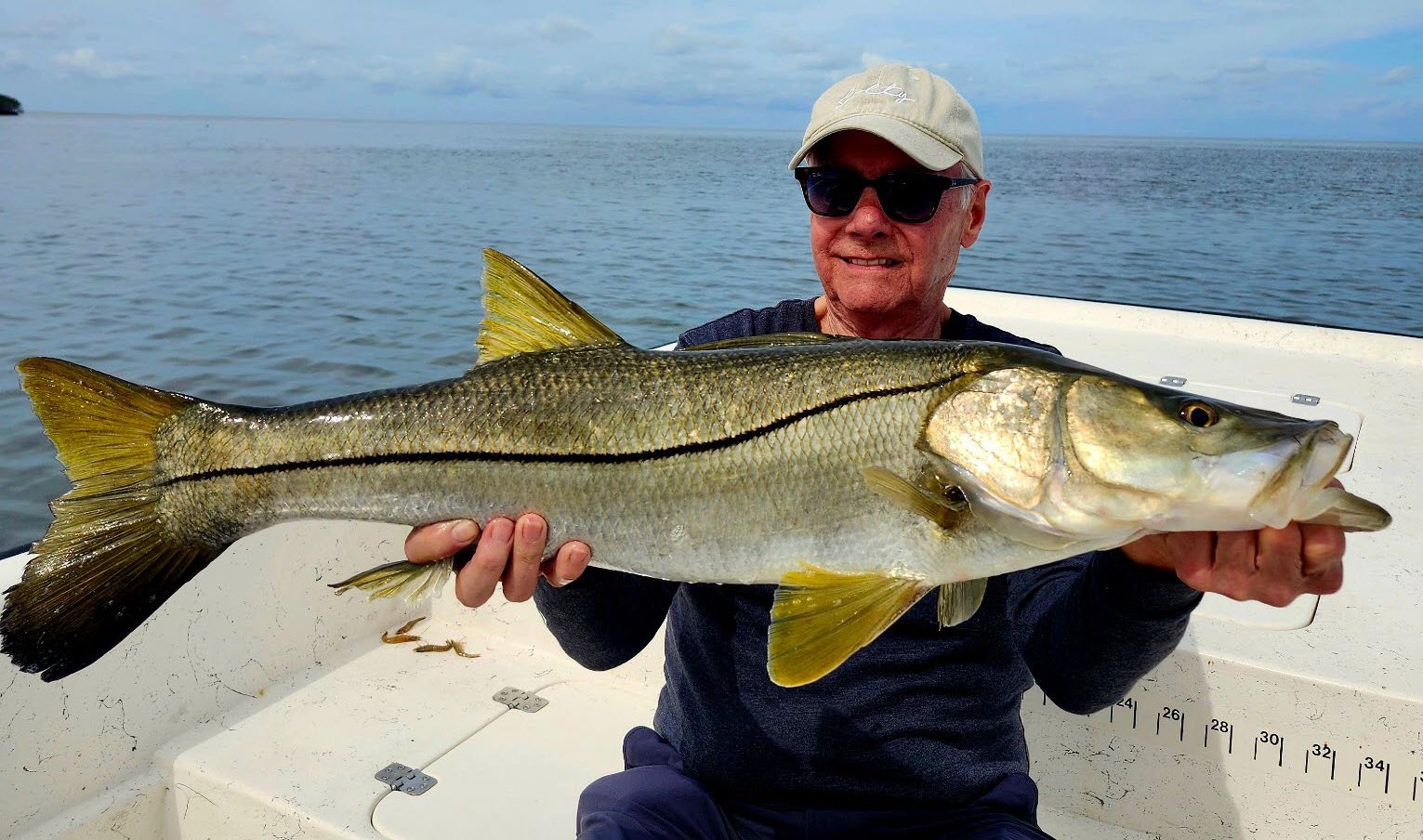
Snook shift from refuge water to feed-focused positioning once current and bait line up. In April that means mangrove points, shadow lines, and tidal cuts with enough depth to hold fish but enough flow to feed them, the exact setup behind mangrove-edge current-lane adjustments.
- Prioritize mangrove points and cuts with 3 to 6 feet of moving water beside a shallow shelf.
- Fish live shrimp, small live baitfish, or 4 to 5 inch paddletails on 30 to 40 pound leader.
- Skip the bait tight to root lines, shadow edges, and first-current seams; hold it in place before retrieving.
- Strongest windows are first light, last light, and the first half of the moving tide around points that trap bait.
Late-April Tarpon Recon Around Channels and Travel Routes
Late April is scouting season for tarpon, not full migration volume. The job is to find travel water, bait concentration, and rolling fish before the main push peaks, which makes spring tarpon staging water the correct focus rather than blind soaking.
- Scan 8 to 14 foot channel edges, river mouths, and adjacent flats at first light on low-wind days.
- Carry a dedicated setup with 50 to 65 pound braid, 60 to 80 pound leader, and a 6/0 to 8/0 circle hook.
- Use live mullet or other large live bait only when fish roll, crash bait, or show a defined travel line.
- Treat April as reconnaissance: note tide stage, bait type, light angle, and boat traffic where fish show, then return on the next matching window.
April Fishing Questions Serious Anglers Ask
These are the April questions that change trip planning, tackle selection, and expectations most often.
Is April better for inshore or offshore fishing in Crystal River?
April favors inshore unless a calm weather window opens nearshore structure. Redfish, trout, snook, and black drum remain the most stable targets because tide and clarity are more predictable inside the river, backcountry, and flats. Offshore becomes stronger later, while tarpon scouting improves near the end of the month locally.
What tide is best for April redfish in Crystal River?
The best April redfish tide is the lower half of the falling tide followed by the first push of incoming water. Falling water concentrates bait at drains and outside turns. Early incoming water lets fish slide back onto mud and oyster edges without scattering across the entire flat again daily.
Are artificials or live bait more efficient in April?
Artificial lures cover water faster and excel for trout and sighted redfish when clarity is high. Live shrimp or live baitfish produce better conversion on snook, black drum, and pressured fish holding in current seams. The efficient plan is to start artificial, then switch once fish location is confirmed precisely.
Does April suit beginners, fly anglers, or experienced technical anglers?
April suits all three, but the trip format should change. Beginners do best on trout and redfish with live shrimp. Fly anglers need calm light, clear water, and deliberate boat positioning. Technical anglers gain the most by targeting snook windows, late tarpon signs, and low-water sight opportunities during April conditions.
Trip Selection and Scheduling
Match the trip to the month: inshore for the highest catch consistency, extreme shallow or fly fishing when clarity and wind allow technical presentations, tarpon as a late-April specialty, and offshore only when weather opens a stable window.
For current seasonal context, compare the fishing reports archive with March fishing in Crystal River. Use inshore fishing charters for the highest April consistency, extreme shallow fishing when low water and visibility favor sight work, fly fishing for technical presentations, Crystal River tarpon fishing charters for late-month staging fish, and offshore fishing charters when weather allows.
Trip logistics, included tackle, and planning details are on charter information. Scheduling runs through online reservations, and direct trip questions belong on the contact page.
